

Common Mistakes When Securing VAT Bridging Finance for Commercial Property Purchases
Commercial property acquisition costs are rising, yet many developers overlook the most volatile component of their budget: Value Added Tax. According to recent market analysis, over 40% of commercial property transactions in the UK involve significant VAT liabilities that can derail project cash flow if not structured correctly. This statistic highlights why VAT bridging finance has become a critical tool for sophisticated investors. However, navigating this specific lending niche requires precision. Developer Money Market specializes in structuring these complex deals, ensuring that your funding covers not just the asset, but the tax burden as well. Understanding the mechanics of VAT bridging is essential to avoid costly delays and lender rejections. (Contact Developer Money Market)
Understanding VAT Bridging Finance
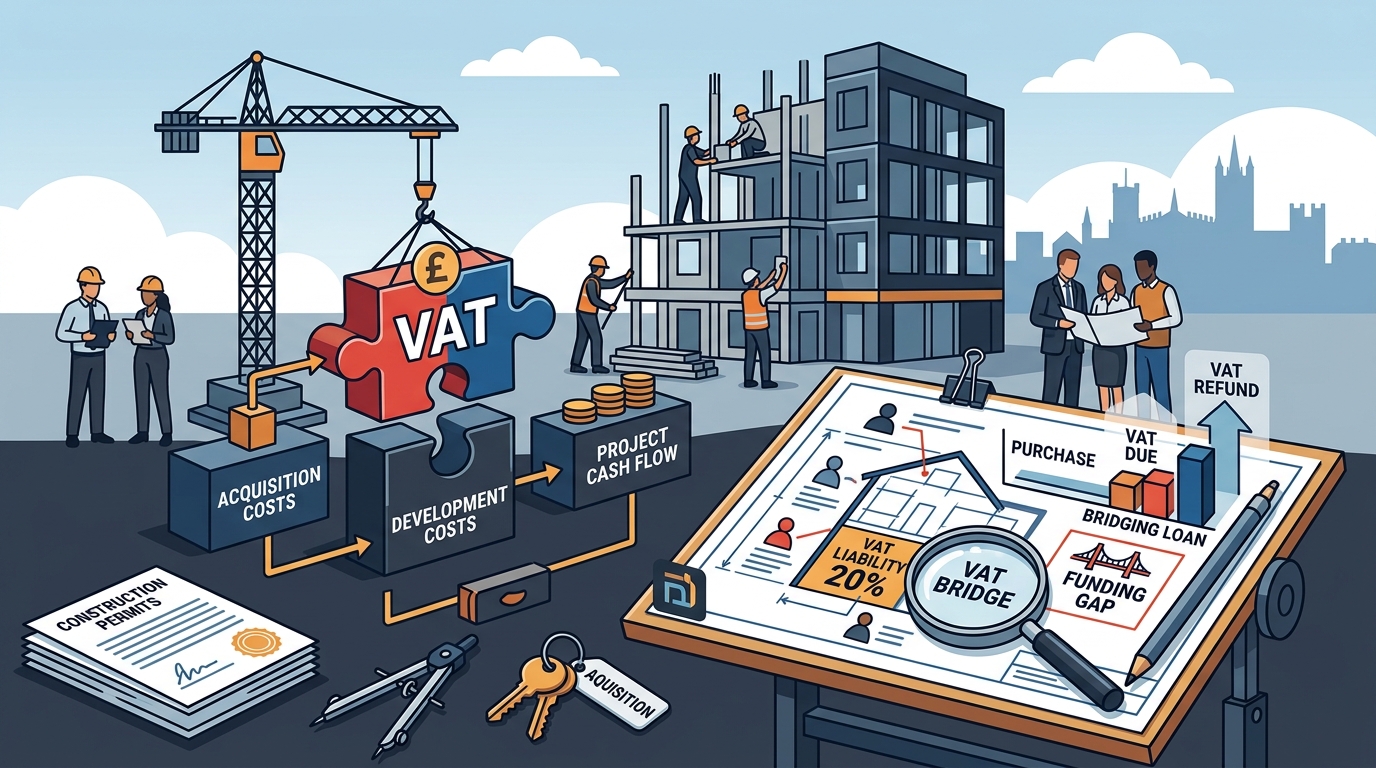
VAT bridging finance is a short-term loan product designed to cover the Value Added Tax liability on a commercial property purchase. In the UK, commercial property transactions are typically subject to VAT at the standard rate, which can be 20% of the purchase price. For a £1 million property, this means an immediate £200,000 cash requirement. Most traditional lenders will not release funds for the VAT portion until the transaction is complete, leaving the buyer with a massive cash gap.
VAT bridging loans fill this gap. They are usually repaid once the property is refinanced into a long-term commercial mortgage or sold. This product is essential for investors who want to preserve their capital for other investments or who do not have the liquidity to pay VAT upfront. Developer Money Market works with over 120 specialist lenders to find the most competitive rates for these specific needs. Our team understands that VAT bridging is not just about borrowing money; it is about timing and cash flow management.
Mistake 1: Miscalculating Loan-to-Value Ratios
One of the most frequent errors is miscalculating the Loan-to-Value (LTV) ratio when including VAT in the total cost. Lenders typically offer up to 75% of the purchase price for the property itself. However, if you do not account for the VAT in your total funding requirement, you may find yourself short of cash at completion.
For example, if you are buying a property for £1 million plus £200,000 VAT, the total cost is £1.2 million. If you only secure a loan for £750,000 (75% of the purchase price), you still need £450,000 in cash. This is a significant shortfall. The correct approach is to seek a loan that covers the purchase price plus the VAT, often referred to as Loan-to-Cost (LTC). Specialist lenders can offer up to 90% LTC for VAT bridging, but this requires precise calculation.
At Developer Money Market, we structure deals to ensure your funding covers the entire acquisition cost. Our comparison tool helps you find lenders who offer high LTC ratios for VAT bridging. By getting the LTV calculation right from the start, you avoid the need for expensive equity injections or last-minute cash calls.
Mistake 2: Ignoring Landlord Status and VAT Recovery
Another critical mistake is failing to consider your VAT recovery status. If you are VAT registered and the property is elected for taxation, you can recover the VAT paid. However, this recovery process takes time. You cannot use the VAT refund from HMRC to pay the bridging loan immediately. This creates a cash flow mismatch.
Lenders are aware of this delay. They will assess your ability to service the bridging loan interest during the period between completion and VAT recovery. If you ignore this timeline, you may struggle to make interest payments. It is crucial to have a clear plan for how you will cover the interest costs during the recovery period. This might involve using existing cash reserves or securing a separate interest-only facility.
Our funding guides provide detailed insights into VAT recovery timelines and how they impact your financing strategy. Understanding these nuances is key to securing a loan that aligns with your cash flow capabilities. We help you present a robust case to lenders by clearly outlining your VAT recovery plan.
Mistake 3: Poor Timing and Lender Response
Timing is everything in property finance. Many developers make the mistake of approaching lenders too late in the process. VAT bridging loans require quick decision-making and fast completion. If you wait until after you have signed a contract, you may miss the window for the best rates.
Lenders need time to assess the property, the borrower, and the exit strategy. Delays in providing documentation can result in lost opportunities or higher rates. Developer Money Market prides itself on its ability to package deals properly so lenders respond faster and better. Our team has extensive experience in preparing comprehensive loan applications that meet lender criteria from the outset.
By engaging with us early, you can secure a decision in principle before you even exchange contracts. This gives you the confidence to negotiate with sellers and ensures that your funding is ready when you need it. Our video guides offer practical advice on how to prepare your documentation for a swift lender response.
Mistake 4: Ignoring Exit Strategy Viability
VAT bridging finance is a short-term solution. Lenders will scrutinize your exit strategy to ensure they can recover their money. Common exit strategies include refinancing with a long-term mortgage or selling the property. If your exit strategy is weak or unrealistic, lenders will reject your application.
For example, if you plan to refinance, you must demonstrate that you meet the criteria for the long-term lender. This includes having a solid business plan, sufficient equity, and a clear path to profitability. If you plan to sell, you need to show that there is a viable market for the property at the projected price.
Developer Money Market helps you structure your exit strategy to meet lender requirements. We work with lenders who specialize in complex cases and can offer flexible terms. Our case studies showcase successful exits for VAT bridging loans, providing inspiration and proof of concept for your own project.
Mistake 5: Choosing the Wrong Lender Profile
Not all lenders offer VAT bridging finance. Some traditional banks may not have the appetite for this type of product. Other lenders may have specific criteria regarding the type of property or the borrower's experience. Choosing the wrong lender can lead to rejection or unfavorable terms.
It is essential to work with a broker who has access to a wide panel of specialist lenders. Developer Money Market works with over 120 of the UK’s leading specialist lenders, giving us the ability to find the best deal for your specific circumstances. We understand the nuances of each lender’s criteria and can match your project with the most suitable funding source.
Our independent broker status means we are not tied to any single lender. This allows us to shop around for the best rates and terms on your behalf. We also offer equity investment options for developers who need additional capital to support their exit strategy.
Comparison of Finance Options
Understanding the different types of finance available for commercial property purchases is crucial. Below is a comparison of common options, including VAT bridging finance.
| Finance Type | Typical LTV | Term Length | Best For | Key Benefit |
|---|---|---|---|---|
| VAT Bridging Finance | Up to 90% LTC | 3-12 months | Covering VAT liability | Preserves cash flow |
| Standard Bridging Loan | 65-75% LTV | 6-18 months | Quick acquisition | Fast completion |
| Commercial Mortgage | 60-70% LTV | 5-25 years | Long-term holding | Lower interest rates |
| Joint Venture | 100% LTC | Flexible | Large projects | No debt on balance sheet |
Each option has its own advantages and disadvantages. VAT bridging finance is ideal for covering the immediate tax burden, while a commercial mortgage is better for long-term holding. Developer Money Market can help you determine the best mix of finance for your project. Our blog provides further insights into choosing the right finance structure.
Key Takeaways
- VAT bridging finance covers the 20% VAT liability on commercial property purchases, preventing cash flow crises.
- Loan-to-Cost (LTC) ratios are more relevant than Loan-to-Value (LTV) when calculating VAT bridging needs.
- VAT recovery takes time, so you must have a plan for covering interest payments during the recovery period.
- Early engagement with a specialist broker like Developer Money Market ensures faster lender responses and better rates.
- A robust exit strategy is essential for securing VAT bridging finance, whether through refinancing or sale.
- Developer Money Market works with over 120 specialist lenders to find the best deals for complex cases.
- No upfront fees are charged by Developer Money Market, making it cost-effective to seek professional advice.
Frequently Asked Questions
What is VAT bridging finance?
VAT bridging finance is a short-term loan used to cover the Value Added Tax liability on a commercial property purchase, allowing investors to preserve their capital.
How much can I borrow for VAT bridging?
Lenders typically offer up to 90% of the total cost, including the purchase price and VAT, depending on the borrower's profile and the property type.
How long does VAT bridging finance last?
The typical term is between 3 and 12 months, allowing time for refinancing or sale of the property.
Can I recover the VAT I pay?
If you are VAT registered and the property is elected for taxation, you can recover the VAT from HMRC, but this process takes time and does not provide immediate cash.
Do I need a personal guarantee?
Some lenders may require a personal guarantee, but Developer Money Market works with lenders who offer non-PG options for qualified borrowers.
What are the costs associated with VAT bridging?
Costs include arrangement fees and interest rates, which vary by lender. Developer Money Market offers competitive rates and no upfront fees for our services.
How do I apply for VAT bridging finance?
You can apply by contacting Developer Money Market directly. Our team will assess your project and match you with suitable lenders from our panel.
Is VAT bridging finance regulated?
Developer Money Market is not authorized by the FCA but works with FCA-authorized broker partners to ensure compliance and professional standards.
Secure Your Funding Today
Securing VAT bridging finance requires expertise, speed, and access to the right lenders. Developer Money Market is your partner in navigating this complex landscape. With over 320 loan products available and a team of experienced deal packagers, we can help you secure the funding you need for your commercial property purchase.
Do not let VAT liabilities derail your project. Contact us today on 01244 953360 or request a call back to discuss your funding requirements. Our team is ready to provide tailored solutions and expert advice to help you succeed in the commercial property market.