

Common Mistakes When Choosing a Development Finance Broker for UK Property Schemes
Choosing the right development finance broker is the single most critical decision for any UK property developer. A poor choice can delay projects by months, inflate costs, or lead to funding withdrawal at the worst possible time. According to recent industry data, over 30% of development projects face significant delays due to inadequate initial funding structuring. This statistic highlights why selecting a partner with deep lender relationships and technical expertise is not just helpful, but essential for project viability. (Independent Finance Broker Services)
Understanding Broker Types and Market Access
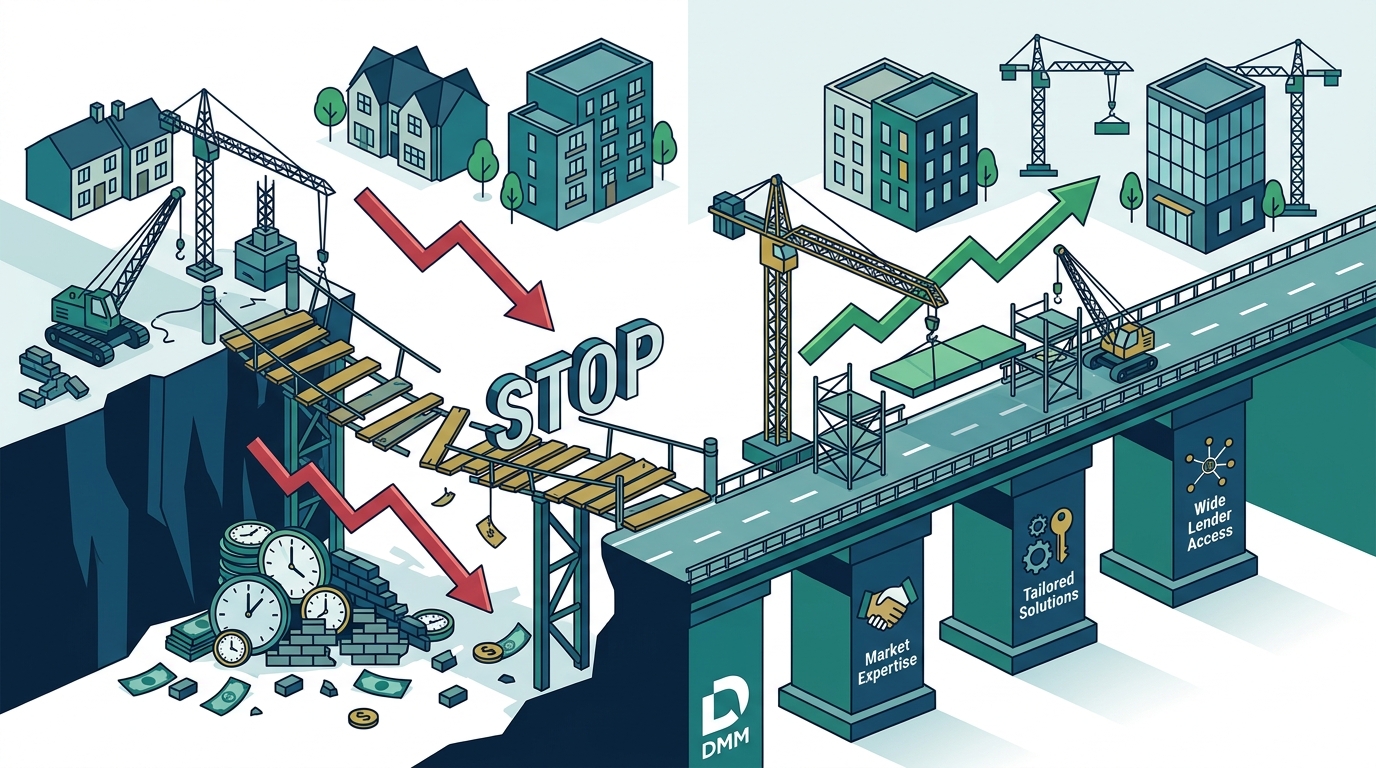
One of the most frequent errors developers make is assuming all finance brokers offer the same access to capital. In reality, the UK property finance landscape is fragmented. Some brokers are generalists who dabble in development finance, while others are specialists dedicated entirely to this sector. Developer Money Market is an award winning specialist development finance broker built by team members with lender backgrounds, structuring deals the way credit teams actually underwrite them to deliver our clients structured finance solutions.
Specialist brokers typically have access to a wider range of niche products. For instance, they can source development finance from over 120 of the UK’s leading specialist lenders. This breadth of access allows them to find solutions for complex cases that generalist brokers might reject outright. When evaluating a broker, ask directly about their lender panel. If they only work with two or three mainstream banks, their ability to solve complex funding gaps is severely limited.
Furthermore, the definition of a "whole of market" broker is often misused. A true whole of market broker has direct relationships with non-bank lenders, private credit funds, and specialist banks. These institutions often provide more flexible terms for unconventional projects. Without this access, developers are forced into rigid, high-cost products that may not align with their exit strategy.
Ignoring Specific Lender Criteria and Niche Expertise
Another critical mistake is failing to match the broker’s expertise to the specific type of development. Not all lenders are created equal. Some specialize in residential new builds, while others focus on commercial conversions or agricultural land. If you are pursuing a complex project, such as a mixed-use development, you need a broker who understands the unique underwriting criteria for each component.
For example, lenders assessing HMO (House in Multiple Occupation) projects look at different metrics than those evaluating single-family homes. They scrutinize rental yields, local demand, and management structures more closely. A broker who lacks this niche knowledge may submit your application to the wrong lenders, resulting in immediate rejections and damaging your credit profile. According to market analysis, targeted applications have a significantly higher approval rate than broad, untargeted submissions.
Additionally, consider the stage of your project. Some lenders prefer to fund greenfield sites, while others only finance part-built developments. Developer Money Market offers funding for part-built developments, addressing a common gap in the market. If your broker cannot navigate these nuances, they may miss out on vital funding opportunities that could save your project.
Overlooking Fee Transparency and Commission Structures
Cost is a major factor in choosing a broker, but developers often focus only on the headline fee. The true cost of brokerage involves understanding the commission structure. Some brokers charge upfront fees, while others take a percentage of the loan amount from the lender. This is known as a commission model. Different lenders pay different amounts depending on different commission models, which can include fixed fees, fixed rates of commission, or a percentage of the amount you borrow.
Transparency is key. A reputable broker will clearly disclose how they are compensated. Developer Money Market works with the following commission models that will include one or more of the following options: fixed fee, fixed rate of commission or a percentage of the amount you borrow. They ensure that this information is disclosed to you throughout your customer journey. This transparency builds trust and ensures there are no hidden surprises later in the process.
Moreover, consider the value proposition. A broker with no upfront fees, like Developer Money Market, may seem more attractive initially. However, the real value lies in their ability to secure better terms. A slightly higher broker fee is often justified if they secure a lower interest rate or more flexible repayment terms. Always calculate the total cost of capital, not just the broker’s fee.
Failing to Prioritize Deal Packaging Quality
Perhaps the most overlooked aspect of broker selection is the quality of deal packaging. Lenders receive thousands of applications daily. A poorly packaged deal is often rejected quickly, regardless of the project’s potential. Developer Money Market operates as Deal Packaging Experts – We package deals properly so lender respond faster and better.
Effective packaging involves more than just filling out forms. It requires a deep understanding of how credit teams underwrite deals. This includes presenting a robust business plan, realistic costings, and a clear exit strategy. A skilled broker will anticipate lender questions and address them proactively in the application. This reduces the back-and-forth communication and speeds up the decision-making process.
Consider the impact of speed. In the competitive UK property market, time is money. Delays in funding can mean missing out on auction properties or facing rising construction costs. A broker who prioritizes efficient packaging can help you secure funding in weeks rather than months. This speed can be the difference between a profitable project and a loss-making one.
Neglecting Geographic and Regulatory Scope
Finally, developers often neglect the geographic scope of their broker’s services. While many brokers focus on England and Wales, some have access to lenders who operate across the UK and internationally. This is crucial for developers working in Scotland, Northern Ireland, or even overseas markets like Gibraltar and the Channel Islands.
Regulatory differences also play a significant role. The UK property finance market is influenced by various regulatory frameworks. A broker who is a proud member of the NACFB – the UK's leading trade association for commercial finance brokers – adheres to higher professional standards. This membership ensures that the broker is committed to professional standards in commercial finance, providing an additional layer of security for clients.
Furthermore, consider the broker’s ability to handle cross-border transactions. If you are investing in multiple regions, you need a broker who understands the local lending practices and regulatory requirements in each area. A broker with a limited geographic scope may not be able to provide the comprehensive support you need.
Key Takeaways
- Specialist Access: Choose a broker with access to over 120 specialist lenders to ensure comprehensive market coverage.
- Niche Expertise: Verify the broker’s experience with your specific project type, such as HMOs or commercial conversions.
- Fee Transparency: Ensure clear disclosure of commission models, including fixed fees or percentage-based structures.
- Packaging Quality: Prioritize brokers who understand credit team underwriting to speed up approval times.
- Regulatory Compliance: Look for NACFB membership to ensure adherence to high professional standards.
- Geographic Reach: Confirm the broker can support your project’s specific location, including Scotland or Northern Ireland.
- No Upfront Fees: Consider brokers who offer no upfront fees to reduce initial financial burden.
Frequently Asked Questions
What is the difference between a development finance broker and a mortgage broker?
A development finance broker specializes in short-term loans for property construction and renovation, while a mortgage broker focuses on long-term residential or commercial mortgages. Development finance requires more complex structuring and risk assessment.
How do I know if a broker is a specialist?
Ask about their lender panel and past case studies. A specialist broker will have access to over 320 development, bridging, and JV products and can demonstrate experience with complex cases.
Are there upfront fees for using a development finance broker?
Not necessarily. Many reputable brokers, including Developer Money Market, operate with no upfront fees, earning their commission from the lender upon successful funding.
Can a broker help with part-built developments?
Yes, many specialist brokers offer funding for part-built developments, providing flexibility for developers who need to continue work on existing sites.
Why is NACFB membership important?
NACFB membership indicates that the broker adheres to the UK's leading trade association standards for commercial finance brokers, ensuring professional conduct and client protection.
What is a development exit loan?
A development exit loan is a long-term mortgage used to repay the short-term development finance once the project is complete and sold or let. It is a crucial part of the funding strategy.
How quickly can a broker secure funding?
With proper deal packaging, a specialist broker can often secure funding in a matter of weeks, significantly faster than traditional banks which may take months.
Secure Your Development Funding Today
Choosing the right development finance broker can make or break your property scheme. By avoiding these common mistakes and partnering with a specialist like Developer Money Market, you can ensure your project is funded efficiently and effectively. Our team is here to support you from initial assessments through completing your finance requirement. With no upfront fees, there’s no reason not to contact us today on 01244 953360 or request a call back here! Visit our Contact Us page to start your journey.