

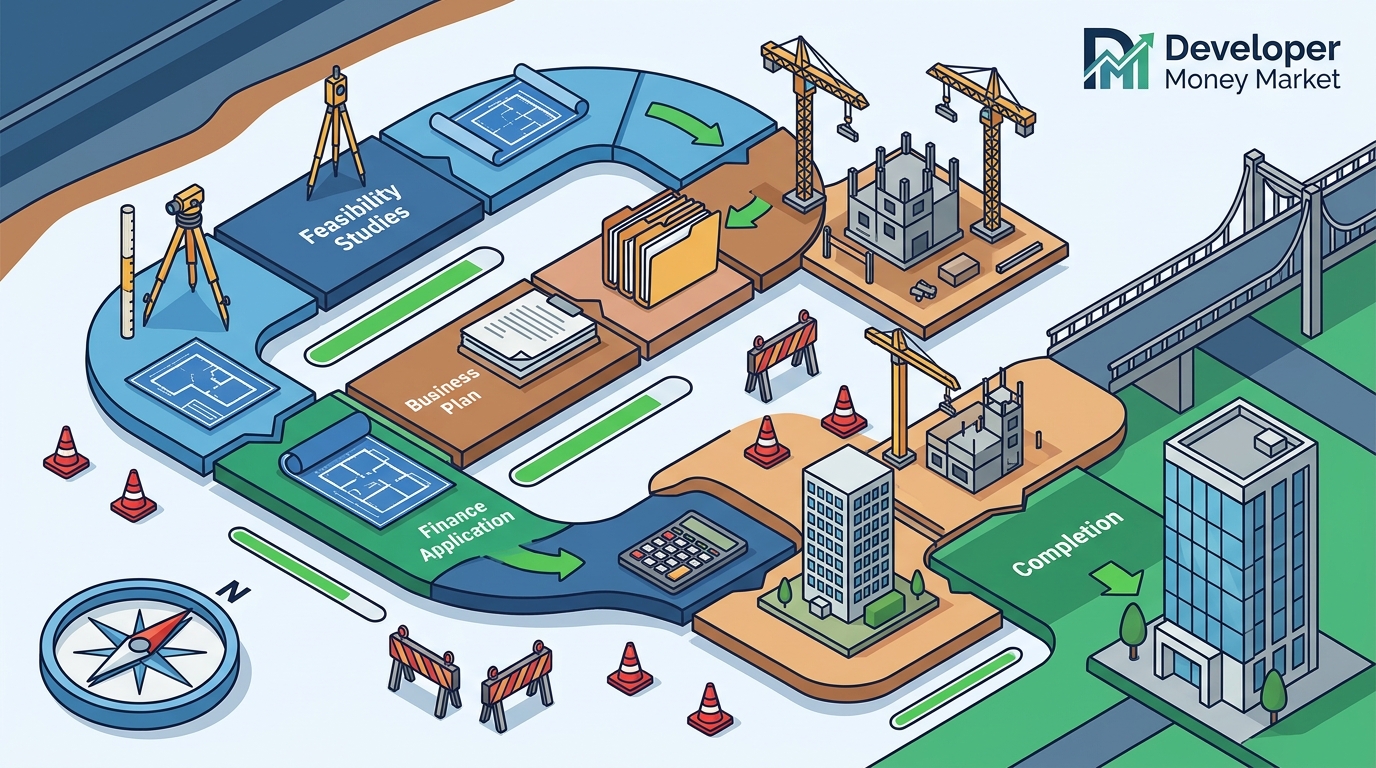
Property development is a high-stakes endeavor where capital availability often dictates project viability. According to recent industry data, over 60% of development projects face delays primarily due to financing gaps or lender rejection during the initial assessment phase. This statistic highlights the critical importance of having a structured, well-documented financial proposal before approaching any credit provider. Without a clear roadmap, even experienced developers can find themselves stalled by bureaucratic hurdles or unsuitable lending criteria. This guide outlines the precise steps to secure the necessary capital, leveraging the expertise of specialist brokers like Developer Money Market to navigate the UK's complex lending landscape.
Step 1: Assess Your Project Viability and Funding Gap
Before seeking capital, you must define the financial architecture of your development. Development finance is a short-term loan used to fund the construction or renovation of property projects. Unlike traditional mortgages, these loans are secured against the land and the projected future value of the completed development.
The first action is to calculate your total project cost. This includes land acquisition, planning fees, construction costs, professional fees, and contingency reserves. Typically, lenders require you to contribute a minimum of 10% to 20% of the total cost as equity. If you lack the cash to put into the deal, you may need to explore equity investment options that can provide between £200,000 to £1 million for your next project.
Understanding your funding gap is essential. If you are looking to raise 100% of your total property development costs, you must look specifically for 100% Joint Venture Funding or specific lender products that allow for high loan-to-cost ratios. Misjudging this gap is the most common reason for early-stage rejection.
Step 2: Choose the Correct Finance Product
Not all development loans are created equal. The structure of your finance depends on the project type, your experience level, and the exit strategy. Mezzanine funding is a secondary loan that sits behind the senior lender in the capital stack, often used to cover the equity gap. It is typically more expensive but allows you to borrow more against the project.
For complex cases or unusual properties, you may need specialist deal structuring that goes beyond standard senior lending. You might also consider Revolving Credit Facilities if you have a pipeline of multiple projects, providing funding of up to £3 million ready to be drawn quickly when needed.
For those with part-built developments, specific products exist to complete the construction. Similarly, if you are looking for bridging finance to secure a site at auction before converting it to long-term development finance, you must understand the distinct criteria for each. Rates for bridging can start from 0.65% per month, but terms vary significantly between lenders.
Step 3: Prepare Your Technical and Financial Documentation
Lenders do not just look at the property; they look at the developer. A robust application package is non-negotiable. This includes detailed feasibility studies, architectural plans, and a realistic Gross Development Value (GDV) assessment. GDV is the estimated total value of the completed development project if sold on the open market. Lenders will typically lend up to 65-75% of this GDV.
You must also prepare a comprehensive cash flow forecast. This document shows how the loan will be drawn down over time and how interest payments will be handled. For projects involving VAT, you may need to secure VAT loans to cover the tax element, ensuring you do not face liquidity issues during construction.
If your project involves land remediation, you should also investigate land remediation tax relief to offset costs. Having these technical documents pre-prepared demonstrates professionalism and reduces the time lenders spend on due diligence.
Step 4: Engage a Specialist Broker for Deal Packaging
While you can approach lenders directly, using a whole-of-market independent broker significantly increases your chances of approval. Deal packaging is the process of structuring and presenting a loan application to maximize the likelihood of lender acceptance. Developer Money Market, for instance, is an award-winning specialist development finance broker built by team members with lender backgrounds.
Brokers understand how credit teams actually underwrite deals. They know which of the 120+ specialist lenders are currently active in specific sectors, such as HMO development, student accommodation, or care homes. They can also help you find products with no personal guarantee (PG) requirements, which is crucial for protecting your personal assets.
By using a broker, you avoid the "shotgun approach" of applying to multiple lenders, which can negatively impact your credit file. Instead, they target the most suitable lenders from their panel of over 320 development, bridging, and JV products. You can also use the Developer Money Market Loan Search Platform to compare loan products instantly.
Step 5: Navigate the Credit Underwriting Process
Once your application is submitted, the underwriting process begins. This involves a rigorous assessment of your experience, the site's planning status, and the financial viability. Underwriting is the lender's evaluation of the risk associated with lending to you and funding your specific project.
Be prepared to answer detailed questions about your construction timeline, contractor selection, and sales strategy. If you are an inexperienced developer, lenders may require you to have an experienced project manager or developer partner. For no PG requirement cases, the project's security and equity contribution become even more critical.
Complex cases, such as those involving conversions or Permitted Development Rights (PDR), require lenders with specific expertise. A specialist broker ensures your deal is packaged in a way that highlights these strengths, rather than exposing weaknesses to unsuitable lenders.
Step 6: Complete the Drawdown and Exit Strategy
Upon approval, the loan agreement is signed, and the drawdown process begins. Funds are released in stages as construction milestones are met. This requires regular reporting and site inspections by the lender's surveyor. Exit strategy is the method by which you repay the development loan, typically through the sale of the property or refinancing into a long-term mortgage.
Your exit strategy must be robust and realistic. Lenders will scrutinize your sales projections and marketing plan. For development exit funding, some lenders offer products with no monthly interest payments, which can improve cash flow during the construction phase.
If you are using Joint Venture Funding, the equity partner will also be involved in the exit process, sharing in the profits. Ensuring your exit is clearly defined and achievable is the final key to securing your finance.
Comparison of Development Finance Options
Understanding the differences between finance types is crucial for selecting the right path. The table below summarizes the key features of common development finance products available in the UK market.
| Finance Product | Best For | Typical Loan Size | Key Feature |
|---|---|---|---|
| Senior Development Finance | New builds and major conversions | £25,000 to £150 million | Up to 75% of GDV |
| Mezzanine Finance | Covering equity gaps | Varies | Secondary to senior debt |
| Bridging Finance | Auction purchases and quick acquisition | Varies | Fast completion, higher rates |
| Joint Venture (JV) | Developers lacking equity | £200k to £1 million+ | 100% LTC funding options |
| Revolving Credit | Experienced developers with pipelines | Up to £3 million | Flexible drawdown |
Key Takeaways
- Developer Money Market is a proud member of the NACFB, the UK's leading trade association for commercial finance brokers, ensuring professional standards.
- Access to over 120 specialist lenders allows for tailored solutions for complex cases and unusual properties.
- No upfront fees are charged by Developer Money Market, reducing the initial financial burden on developers.
- Products are available for England, Wales, Scotland, Northern Ireland, Gibraltar, and the Channel Islands, providing broad geographic coverage.
- Loan sizes can range from over £25,000 to £150 million, accommodating everything from small conversions to large-scale commercial projects.
- Specialist products include VAT loans, land remediation tax relief, and funding for part-built developments.
- Fast decisions are possible with bridging finance, with rates starting from 0.65% per month for residential and commercial properties.
Frequently Asked Questions
What is the minimum loan amount for property development finance?
Developer Money Market facilitates borrowing from over £25,000, making it accessible for smaller projects or land purchases. However, most senior development lenders prefer larger sums for new builds.
Can I get development finance with no personal guarantee?
Yes, there are options for no PG requirement finance, particularly for experienced developers or projects with significant equity. These products are less common but available through specialist lenders.
How long does it take to secure development finance?
With a well-packaged deal, approval can take as little as a few days. Bridging finance is known for fast decisions and fast loan completions, while senior development finance may take longer due to the complexity of underwriting.
What is the difference between senior and mezzanine finance?
Senior finance is the primary loan secured against the property. Mezzanine finance is a secondary loan that sits behind the senior lender, often used to cover the equity gap. It carries higher risk and therefore higher interest rates.
Do you offer funding for commercial developments?
Yes, Developer Money Market provides funding for residential, mixed-use, and commercial developments, including leisure, agriculture, and industrial projects. They also support hotel and student accommodation projects.
How does equity investment work for developers?
Equity investment involves a partner providing capital in exchange for a share of the profits. Equity investment of between £200,000 to £1 million is available for developers who have found a project with great profit potential but lack the cash to put into the deal.
What regions do you cover?
Developer Money Market sources funding for projects in England, Wales, Scotland, Northern Ireland, Gibraltar, and the Channel Islands, as well as internationally for certain products.
Ready to Secure Your Development Funding?
Securing property development finance requires precision, expertise, and access to the right lenders. Developer Money Market offers a managed start-to-finish service, with tailored funding solutions and no upfront fees. Whether you need development, stretch, mezzanine, bridge, buy-to-let, or exit loans, their team is ready to help.
Contact us today on 01244 953360 or request a call back here to find your property development funding solution. Do not let funding gaps stall your next project. Visit Developer Money Market to explore their full range of over 320 loan products and start your journey to successful development.