
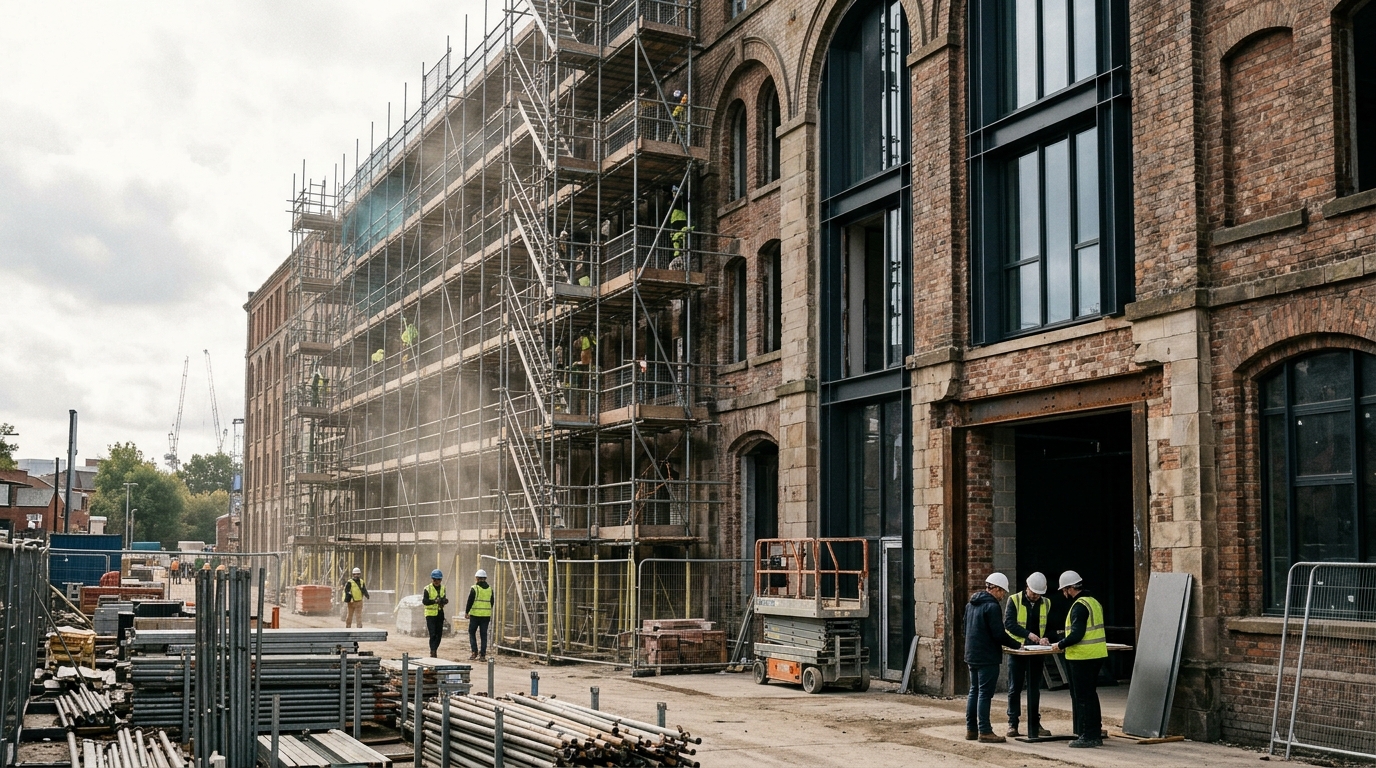
Funding a commercial property refurbishment requires a tailored finance structure that aligns with the project's scope, timeline, and exit strategy. Refurbishment finance is a specialized loan product designed to fund the renovation, modernization, or structural improvement of existing commercial assets. Unlike standard commercial mortgages, these facilities are typically short-term and secured against the property's post-completion value (PCV). Developer Money Market, a UK-based property development finance broker, helps investors and developers navigate this complex landscape by connecting them with specialist lenders who understand the nuances of commercial upgrades.
Understanding the Core Mechanics of Refurbishment Loans
Commercial refurbishment finance operates on a distinct set of principles compared to acquisition or long-term hold finance. The primary metric lenders use is the Loan to Refurbishment Value (LRV). Loan to Refurbishment Value is the ratio of the loan amount to the total cost of the project, including both the purchase price and the estimated refurbishment costs. Most specialist lenders cap this ratio between 60% and 75%, depending on the risk profile of the asset and the borrower's experience.
The loan term is usually short, ranging from 12 to 24 months. This structure forces a clear exit strategy, which is typically the sale of the renovated asset or the refinance into a long-term commercial mortgage. The interest rate is often higher than a standard mortgage, reflecting the higher risk and shorter duration. However, the flexibility in drawdowns allows borrowers to release funds in stages as construction milestones are met, improving cash flow efficiency.
Key Factors Lenders Evaluate in Commercial Projects
Lenders do not just look at the property; they scrutinize the entire project ecosystem. The first critical factor is the borrower's track record. Lenders assess the developer's or investor's history of completing similar projects on time and within budget. A strong portfolio of completed refurbishments significantly increases the likelihood of approval and better pricing.
The Application and Underwriting Process
Underwriting is the next phase. The lender's credit committee reviews the risk profile. They will stress-test the project against various scenarios, such as cost overruns or delayed completion. The approval process can take anywhere from two to six weeks, depending on the complexity of the project. During this time, the lender may request additional information or negotiate the terms. It is crucial to maintain open communication with the lender and the broker to address any queries promptly.
Structuring the Exit Strategy
The exit strategy is the most critical component of a refurbishment loan. The borrower must demonstrate a clear path to repaying the loan. The most common exit is refinancing into a long-term commercial mortgage once the works are complete and the asset is stabilized. Development exit finance is a specific type of funding that bridges the gap between the completion of the refurbishment and the final long-term refinance. This ensures that the borrower has the liquidity to settle the short-term loan without needing to sell the asset immediately.
Alternatively, the exit could be the sale of the property. In this case, the lender will require evidence of market demand and a realistic valuation of the completed asset. The lender will typically hold a portion of the sale proceeds to cover the loan balance and interest. It is important to align the loan term with the expected timeline for the exit. If the works are delayed, the borrower may face extension fees or penalties. Therefore, building a buffer into the project timeline is a prudent risk management strategy.

Why Use a Specialist Broker for Refurbishment Finance
Navigating the commercial finance market alone can be daunting. There are hundreds of lenders, each with different criteria, risk appetites, and pricing models. A specialist broker acts as a bridge between the borrower and the lenders. Developer Money Market provides access to a wide range of finance products from the UK's leading specialist lenders. This breadth of access allows the broker to match the project with the most suitable funding solution, often securing better terms than the borrower could achieve independently.
Key Takeaways
- Refurbishment finance is a short-term loan secured against the post-completion value of the property.
- The Loan to Refurfishment Value (LRV) is typically capped between 60% and 75% by specialist lenders.
- Lenders prioritize the borrower's track record and the quality of the project documentation.
- A clear exit strategy, such as refinancing or sale, is essential for loan approval.
- Using a specialist broker can improve access to funding and secure better terms.
- Building a buffer into the project timeline helps mitigate the risk of delays and extension fees.
Frequently Asked Questions
What is the typical term for a commercial refurbishment loan?
The typical term for a commercial refurbishment loan is between 12 and 24 months. This short duration is designed to cover the construction period and allow time for the exit strategy, such as refinancing or sale, to be executed.
How much of the project cost can I borrow?
Do I need to be an experienced developer to get approved?
While experience is a significant factor, it is not the only one. Lenders also consider the quality of the project team, the location of the asset, and the strength of the exit strategy. First-time developers may need to provide more detailed documentation and may face stricter lending criteria.
What happens if the project is delayed?
If the project is delayed, the borrower may need to apply for an extension of the loan term. This usually incurs additional fees and interest. It is important to build a buffer into the project timeline to minimize the risk of delays.
Can I use the loan to pay for the purchase of the property?
Yes, the loan can cover both the purchase price and the refurbishment costs. The total loan amount is calculated based on the Loan to Refurfishment Value (LRV) of the combined costs.
How long does the application process take?
The application process can take anywhere from two to six weeks, depending on the complexity of the project and the lender's underwriting process. Using a specialist broker can help streamline this process. Learn more: developermoneymarket com.