
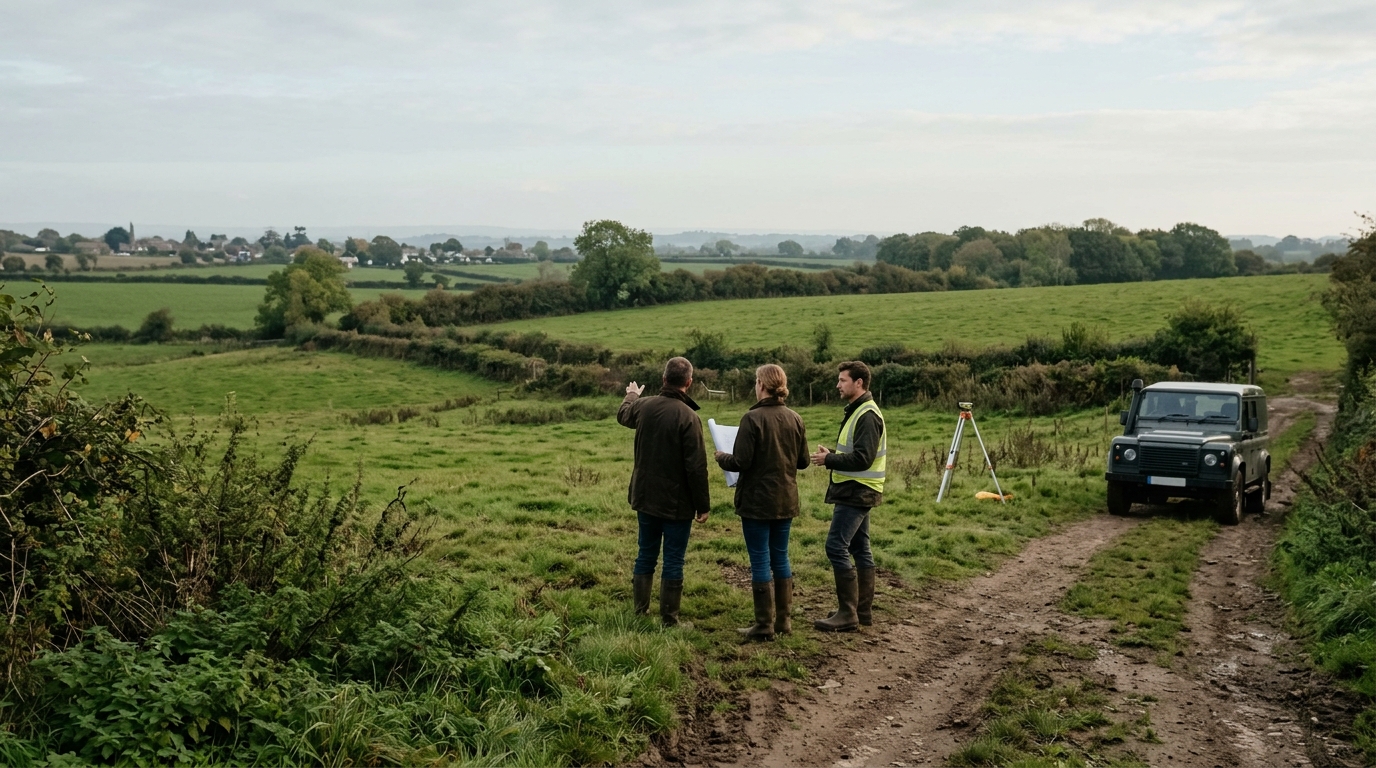
Land acquisition finance is a specialized form of short-term borrowing designed to purchase land for development, often before planning permission is secured. Before speaking to a broker, you must understand your project's risk profile, exit strategy, and the specific lender criteria that apply to your site. Developer Money Market advises developers to prepare a clear feasibility case, as this significantly accelerates the underwriting process and improves the likelihood of securing competitive terms. Understanding these fundamentals ensures you engage with a broker who can match your specific needs to the right specialist lenders.
Understanding the Risk Profile of Your Site
Lenders assess land acquisition finance based on the inherent risks of the site and the development plan. A site with secured planning permission is viewed as lower risk than a greenfield site requiring full planning approval. This distinction directly impacts the loan-to-value (LTV) ratio and interest rates you will be offered. For example, a brownfield site in a high-demand urban area may attract a higher LTV than a rural agricultural plot, even if both are intended for residential development.
Planning Status and Viability
Your planning status is the single most critical factor in lender decision-making. If you have outline or full planning permission, you can demonstrate a clear path to value creation. Without planning, lenders will require a robust feasibility study to prove the site is viable for the intended use. This evidence reduces the perceived risk and allows for more favorable financing terms.
Defining Your Exit Strategy
Land acquisition finance is a bridge product, meaning it is intended to be repaid within a short timeframe, typically 12 to 24 months. You must have a clear exit strategy, such as selling the land to a third party, refinancing into long-term development finance, or completing the development and selling the units. Lenders will scrutinize this exit plan to ensure they can recover their capital. A vague exit strategy is a common reason for declined applications.
Refinancing vs. Sale
Deciding whether to refinance or sell the land affects your cash flow projections. Refinancing into development finance requires the project to be bankable for a longer-term loan, which involves more detailed costings and construction timelines. Selling the land provides a quicker exit but may require a lower purchase price to attract buyers. Your broker can help model both scenarios to determine which aligns best with your investment goals.

Key Financial Metrics Lenders Evaluate
Specialist lenders look beyond the purchase price to assess the overall financial health of the project. They will analyze your equity injection, projected costs, and the final value of the completed development. Understanding these metrics helps you present a stronger case. For instance, a higher equity contribution can offset a lower LTV, demonstrating your commitment and reducing the lender's risk exposure.
Loan-to-Value and Interest Rates
The LTV ratio is the percentage of the land's value that the lender is willing to finance. Higher LTVs mean you need less equity but may come with higher interest rates. Interest rates on land acquisition finance are typically higher than standard mortgages due to the short term and higher risk. You should ask your broker to explain how the LTV and interest rate interact to affect your total cost of borrowing.
Preparing Your Documentation Package
Feasibility Studies and Costings
A detailed feasibility study is essential for sites without planning permission. It should outline the proposed development, construction costs, marketing costs, and projected revenues. This document serves as the backbone of your application. Ensure your costings are realistic and supported by quotes from contractors and consultants. Overly optimistic projections can raise red flags for lenders.
Choosing the Right Broker
Not all brokers have access to the same range of specialist lenders. You need a broker who understands the nuances of land acquisition finance and has relationships with lenders who specialize in your type of project. Developer Money Market provides access to a wide range of finance products from leading UK specialist lenders, ensuring you can compare options quickly. A good broker will guide you through the process, helping you navigate complex lender criteria and negotiate the best terms.
Technology-Driven Comparison
Key Takeaways
- Land acquisition finance is short-term borrowing used to purchase land for development, typically repaid within 12 to 24 months.
- Your planning status significantly impacts the risk profile and terms offered by lenders.
- A clear exit strategy, such as refinancing or selling, is essential for lender approval.
- Lenders evaluate key metrics like LTV, equity injection, and projected costs to assess viability.
- Preparing a complete documentation package, including a feasibility study, accelerates the application process.
- Choosing a broker with access to multiple specialist lenders ensures you can compare competitive options.
- Technology-driven platforms simplify the comparison process and reduce application complexity.
Frequently Asked Questions
What is the typical term for land acquisition finance?
Land acquisition finance is usually a short-term loan with a term of 12 to 24 months. This period allows developers to secure planning permission, complete due diligence, and either sell the land or refinance into long-term development finance.
How much equity do I need for land acquisition finance?
Can I get land acquisition finance without planning permission?
Yes, but it is more challenging. Lenders will require a robust feasibility study to prove the site is viable for the intended development. Without planning permission, the risk is higher, which may result in lower LTVs and higher interest rates.
What documents do I need to apply for land acquisition finance?
You need a business plan, financial statements, site plans, planning applications, and a detailed feasibility study. This documentation package demonstrates your professionalism and helps lenders assess the viability of the project.
How does a broker help with land acquisition finance?
A broker helps by matching your project to the right specialist lenders, negotiating terms, and guiding you through the application process. They have access to multiple lenders and can compare options to find the best fit for your needs.
What is the difference between land acquisition finance and development finance?
Land acquisition finance is used to purchase the land, while development finance is used to fund the construction and completion of the project. Land acquisition finance is typically shorter-term and has different risk assessments based on the site's planning status.
Next Steps for Developers
Preparing thoroughly before speaking to a broker is the best way to secure competitive land acquisition finance. By understanding your risk profile, defining your exit strategy, and preparing a complete documentation package, you position yourself as a serious and viable borrower. Developer Money Market is ready to help you navigate this process, providing access to specialist lenders and tailored finance solutions for your project. Learn more: developermoneymarket com.