

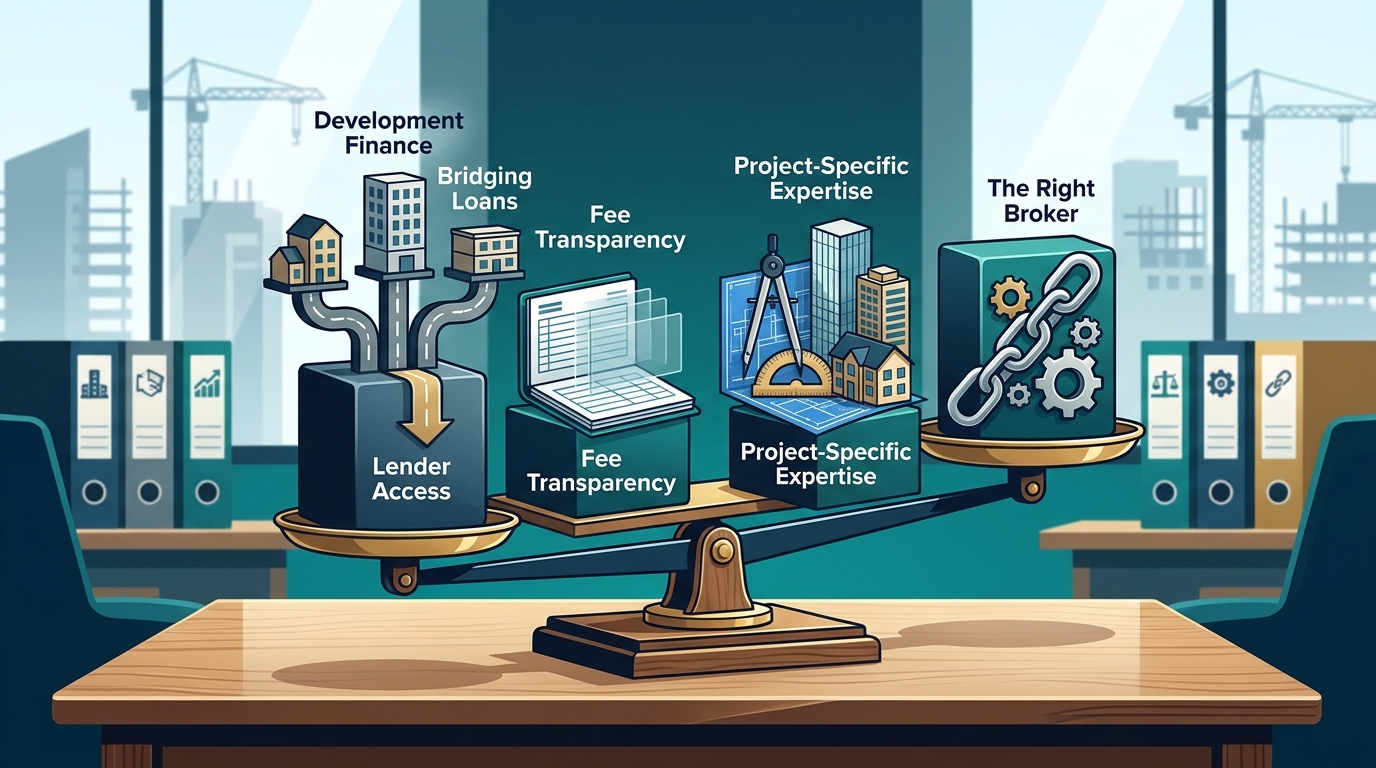
Selecting the right development finance broker requires evaluating lender access, fee transparency, and project-specific expertise. A strong broker connects developers with specialist lenders who understand complex project structures. This guide outlines the critical factors to assess before signing an agreement with a finance intermediary. For additional details, review the developermoneymarket com.
Lender Network and Product Range
The breadth of a broker's lender panel is among the most significant factor in securing competitive funding. A limited panel often results in higher interest rates or restrictive covenants. You need a broker who maintains active relationships with a wide variety of institutions. For additional details, review the .
Development finance is a specialized sector with distinct risk profiles compared to standard commercial lending. Specialist lenders often have specific appetites for certain project types, such as residential builds or commercial refurbishments. A broker with a broad network can match your specific project profile to the most suitable lender. For additional details, review the Customer Experience.
For example, a developer focusing on land acquisition in Northern Ireland may require a lender with specific regional expertise. A broker with a nationwide network, such as Developer Money Market, can access over 320 finance products from leading UK specialist lenders. This depth ensures you are not limited to a single lender's criteria. For additional details, review the Frequently Asked Questions.
Fee Structure and Transparency
Understanding the total cost of funding is critical for project viability. Broker fees can vary significantly, and hidden costs can erode project margins. You must request a full breakdown of many charges before proceeding. For additional details, review the About.
Ask for a written fee schedule that details all potential costs, including valuation fees, legal fees, and early repayment charges. A reputable broker will explain these costs clearly and without pressure. This clarity allows you to model the true cost of capital accurately.
Project-Specific Expertise
Not all brokers have the same level of experience across different property sectors. A broker who specializes in residential development may not have the same depth of knowledge in commercial or mixed-use projects. You need a team that understands the specific risks and timelines of your project type.
Experience is demonstrated through a track record of completed deals in your specific sector. Ask the broker for examples of recent projects similar to yours. This helps you gauge their ability to navigate underwriting processes for complex structures.
For instance, a project involving a complex mixed-use development in a major city requires a broker who understands the interplay between residential and commercial valuations. A broker with deep sector knowledge can anticipate lender concerns and structure the application accordingly.
Application Process and Speed
Time is a critical factor in property development. Delays in funding can lead to significant financial losses, including missed market opportunities or increased holding costs. You need a broker who can streamline the application process and manage lender expectations effectively.
The speed of a broker's service depends on their relationships with lenders and their internal processes. A technology-driven platform can accelerate the comparison and application stages. This efficiency is particularly important for time-sensitive projects, such as auction purchases or short-term bridging loans.
Ask the broker about their typical turnaround times for initial quotes and final approvals. A clear timeline helps you plan your project milestones effectively. A broker who can provide rapid feedback on lender interest can save you valuable time and money.
Ongoing Support and Communication
Communication is key to a successful partnership. You need a broker who is proactive in updating you on the status of your application and any changes in lender requirements. This level of service ensures you are never left in the dark about critical funding decisions.
Consider the broker's availability and responsiveness. A dedicated account manager can provide a single point of contact for all your queries. This continuity of service is a significant advantage when dealing with complex funding structures.
Key Takeaways
- Evaluate the breadth of the broker's lender network to ensure access to competitive rates.
- Request a full, written breakdown of many fees and costs to avoid hidden charges.
- Verify the broker's specific experience in your project type and location.
- Assess the broker's ability to deliver fast turnaround times for time-sensitive projects.
- Check for a technology-driven platform that simplifies the comparison and application process.
Frequently Asked Questions
How many lenders should a development finance broker have access to?
A robust broker should have access to a wide panel of specialist lenders, often numbering in the hundreds. This breadth allows them to match your specific project profile to the most suitable funding source, ensuring competitive terms.
What is among the typical fee structure for a development finance broker?
How long does it take to secure development finance through a broker?
Turnaround times vary depending on the complexity of the project and the lender's requirements. A technology-driven broker can often provide initial quotes within days, with final approvals taking a few weeks.
Do I need a broker if I can approach lenders directly?
Using a broker is often more efficient because they have established relationships with lenders and understand their specific criteria. They can save you time and help you secure better terms by presenting your application in the best possible light.
Can a broker help with land acquisition finance?
Yes, many brokers specialize in land acquisition finance. They can connect you with lenders who have specific appetites for land deals, helping you secure the funding needed to purchase the site.
What is the role of a broker in the underwriting process?
The broker prepares and submits the application to the lender, acting as the intermediary. They manage the communication between you and the lender, addressing any queries and providing additional information as required. Learn more: developermoneymarket com.