

Essential Criteria and Lender Standards for UK SME Property Development Finance
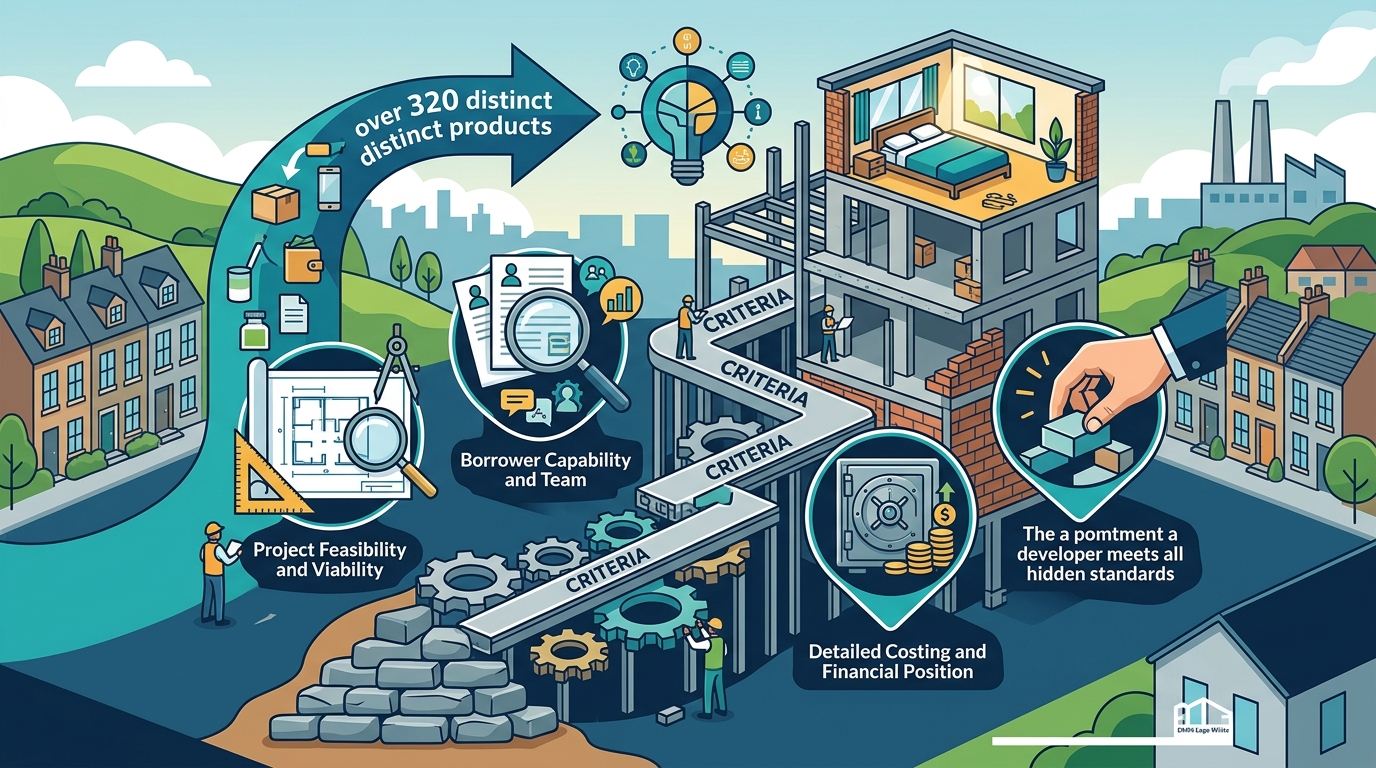
Securing capital for property development in the United Kingdom has become increasingly rigorous as financial institutions tighten their risk appetites. Developer Money Market reports that over 320 distinct development and bridging products are currently available from specialist lenders, yet only a fraction of applications result in immediate funding. This disparity exists because lenders now demand precise alignment between borrower capability and project viability. Understanding these hidden standards is the difference between a stalled site and a profitable completion.
Understanding Development Finance Structures
Property development finance is not a monolithic product. It is a spectrum of lending instruments designed to bridge the gap between land acquisition and the final sale or refinancing of a completed project. For Small and Medium-sized Enterprises (SMEs), navigating this landscape requires clarity on the specific mechanics of each product type.
Senior Development Finance is the most common form of debt used to fund the construction phase. It typically covers land purchase, planning costs, and hard and soft construction expenses. Lenders usually provide between 65% and 75% of the Gross Development Value (GDV) or 80% to 85% of the Gross Project Cost (GPC). This structure allows developers to leverage their capital while retaining equity in the project.
For more complex scenarios, Mezzanine Finance acts as a secondary layer of debt sitting behind the senior lender. This is often used to top up the senior loan, allowing the developer to increase their borrowing capacity. Mezzanine finance is more expensive due to the higher risk it assumes, but it enables deals that might otherwise fail due to insufficient senior lending.
Joint Venture (JV) Funding represents an equity-based approach where the investor takes a share of the project in exchange for capital. This can range from 100% LTC (Loan to Cost) funding to partial equity injections. For SMEs with limited balance sheet strength, JV structures can be a lifeline, as they reduce the debt burden and align the interests of the developer and the investor.
Understanding these structures is critical because each carries different risk profiles and lender expectations. A developer seeking a standard residential build will face different criteria than one pursuing a mixed-use commercial scheme. The team at Developer Money Market specializes in structuring these deals to match the underwriting criteria of over 120 specialist lenders, ensuring that the right product is found for the right project.
Lender Criteria and Developer Experience
One of the most significant hurdles for SME developers is the perception of risk associated with their track record. Lenders scrutinize the developer's history with intense precision. While some lenders offer no personal guarantee options, these are typically reserved for highly experienced developers with a proven portfolio of successful completions.
Developer Track Record is the primary metric lenders use to assess reliability. They will look for evidence of past projects of similar scale, complexity, and location. A developer with a history of delivering on time and within budget is viewed as a lower risk, which can result in more favorable lending terms, such as higher LTV ratios or lower interest rates.
For new developers or those with limited experience, lenders may require a more robust support structure. This often includes a detailed feasibility study prepared by a qualified surveyor, a comprehensive construction program, and a clear exit strategy. Some lenders are willing to work with inexperienced developers if they have a strong commercial partner or a proven project manager overseeing the build.
Financial Stability is another key criterion. Lenders will review the developer's current financial position, including cash flow, existing debt obligations, and net worth. They want to ensure that the developer has the financial resilience to withstand unexpected costs or delays without defaulting on the loan. This is particularly important in the current economic climate, where construction costs remain volatile.
At Developer Money Market, we emphasize the importance of presenting a complete and accurate picture of your financial health. Incomplete or inaccurate information can lead to delays or rejections. Our team helps developers prepare their applications to meet the specific underwriting standards of each lender, increasing the likelihood of a positive response.
Critical Financial Metrics and LTV
Financial metrics are the language of lending. Lenders use specific ratios to determine the viability of a project and the level of risk they are willing to accept. Understanding these metrics is essential for any developer seeking to secure funding.
Loan to Cost (LTC) is the ratio of the loan amount to the total project cost. Lenders typically offer LTC ratios between 80% and 85%. This means the developer must contribute at least 15% to 20% of the total cost from their own resources. This equity contribution demonstrates the developer's commitment to the project and provides a buffer for the lender in case of cost overruns.
Loan to Gross Development Value (LTV) is the ratio of the loan amount to the estimated value of the completed project. Lenders usually offer LTV ratios between 65% and 75%. This metric is crucial because it determines the potential profit margin for the developer. A higher LTV indicates a lower profit margin, which may increase the lender's risk perception.
Internal Rate of Return (IRR) is a measure of the profitability of an investment. Lenders often require developers to demonstrate a minimum IRR, typically around 20% to 25%. This ensures that the project is sufficiently profitable to cover the cost of borrowing and provide a return for the developer. A strong IRR also indicates that the project has a healthy margin for error.
Residual Land Value (RLV) is the value of the land after deducting all development costs, including finance costs, from the GDV. Lenders use RLV to assess the viability of the land acquisition. If the RLV is too low, the lender may view the land purchase as overpriced and refuse to fund the project.
These metrics are interconnected. A change in one will affect the others. For example, an increase in construction costs will reduce the RLV and the IRR, potentially making the project unviable. Developers must model these scenarios carefully to ensure their projects remain within lender parameters. Comparing property development finance lenders can help identify those with more flexible criteria for these metrics.
Assessing Project Viability and Exit Strategies
Project viability is the cornerstone of any development finance application. Lenders need to be confident that the project can be completed successfully and that the exit strategy is robust. A weak viability assessment is a common reason for application rejection.
Construction Costs must be accurate and comprehensive. Lenders will scrutinize the cost plan to ensure it includes all hard and soft costs, including professional fees, planning fees, and contingency sums. Underestimating costs is a frequent error that can lead to funding shortfalls. It is advisable to use a qualified quantity surveyor to prepare the cost plan.
Planning Permission is a critical factor in viability. Lenders prefer projects with full planning permission, as this reduces the risk of delays or refusals. However, some lenders may consider projects with outline permission, provided there is a clear path to full approval. The type of planning permission can also affect the LTV ratio offered.
Market Demand is another key consideration. Lenders will assess the local market to ensure there is sufficient demand for the proposed development. This includes analyzing comparable sales, rental yields, and absorption rates. A project in an oversupplied market may be viewed as higher risk, even if the financial metrics are strong.
Exit Strategy is the plan for repaying the loan. For development finance, the primary exit strategy is usually the sale of the completed property. Lenders will assess the realism of the exit strategy, including the projected sales prices and the time frame for completion. A secondary exit strategy, such as refinancing with a mortgage lender, may also be considered, particularly for buy-to-let developments.
At Developer Money Market, we provide video guides and resources to help developers understand these viability factors. Our team works closely with developers to refine their feasibility studies and exit strategies, ensuring they meet lender expectations. This proactive approach helps to streamline the application process and increase the chances of approval.
Comparing Finance Options for SMEs
SME developers have access to a variety of finance options, each with its own advantages and disadvantages. Choosing the right option depends on the specific needs of the project and the financial position of the developer.
| Finance Option | Best For | Key Benefit | Key Consideration |
|---|---|---|---|
| Senior Development Finance | Standard residential or commercial builds | Lower interest rates compared to other debt | Requires personal guarantee and equity contribution |
| Mezzanine Finance | Projects needing additional capital | Increases borrowing capacity | Higher cost and complex structuring |
| Joint Venture Equity | Developers with limited equity | No debt service requirements | Shares profit with investor |
| Bridging Finance | Fast acquisition or short-term needs | Quick access to funds | Higher interest rates and fees |
| Revolving Credit Facility | Developers with multiple projects | Funding up to £3 million ready to draw | Requires strong track record |
Senior development finance is generally the most cost-effective option for standard projects. However, for developers who need to maximize their leverage, mezzanine finance or joint venture equity may be more appropriate. Bridging finance is useful for short-term needs, such as acquiring a site at auction, but the higher costs make it unsuitable for long-term holds.
Revolving credit facilities are ideal for experienced developers with a pipeline of projects. Developer Money Market offers access to revolving credit facilities of up to £3 million, allowing developers to draw funds quickly as needed. This flexibility can be a significant advantage in a competitive market.
Choosing the right finance option requires a clear understanding of your project's needs and your financial position. Our team at Developer Money Market can help you evaluate your options and structure a deal that aligns with your goals.
Key Takeaways
- Developer Money Market is an award-winning specialist development finance broker built by team members with lender backgrounds.
- We work with more than 120 of the UK’s leading specialist lenders to source the best deals for our clients.
- Over 320 development, bridging, development exit and JV products are available through our network.
- Lenders typically require a minimum equity contribution of 15% to 20% of the gross project cost.
- No personal guarantee options are available for select cases, particularly for experienced developers.
- Revolving credit facilities are available for funding of up to £3 million, ready to be drawn quickly.
- Equity investment options range from £200,000 to £1 million for property development projects.
- We are proud members of the NACFB, the UK's leading trade association for commercial finance brokers.
Frequently Asked Questions
What is the minimum loan amount for property development finance?
Borrowing can start from over £25,000 for smaller projects, while larger developments can access funding up to £150 million. The minimum amount often depends on the lender's specific criteria and the nature of the project.
Do I need a personal guarantee for development finance?
While most lenders require a personal guarantee, there are options for no personal guarantee cases. These are typically available for experienced developers with a strong track record and robust project structures.
How long does it take to secure development finance?
Timelines vary, but with proper preparation, funding can be secured in as little as two to four weeks. Fast decisions and fast loan completions are possible with bridging finance, which can be even quicker.
Can I get funding for a part-built development?
Yes, funding is available for part-built developments. Lenders will assess the current state of the project, the remaining costs, and the viability of completing the build.
What is the difference between LTC and LTV?
LTC (Loan to Cost) is the ratio of the loan to the total project cost, while LTV (Loan to Gross Development Value) is the ratio of the loan to the estimated value of the completed project. LTC is typically higher than LTV.
Do you charge upfront fees?
No, there are no upfront fees for our services. We only receive commission from the lender upon successful completion of the loan. This aligns our interests with yours.
What types of properties can be funded?
We can source funding for a wide range of property types, including residential, mixed-use, commercial, HMO, hotel, student, care home, and retirement developments. We also support leisure, agriculture, and industrial projects.
Secure Your Development Funding
Navigating the complex landscape of UK property development finance requires expertise, experience, and access to a wide network of lenders. Developer Money Market is here to help you secure the right funding for your project. Our team of specialists works with over 120 lenders to find structured finance solutions tailored to your needs.
Whether you are a new developer or an experienced professional, we can help you fill your funding gap. We offer a managed start-to-finish service, from initial assessment to completion, with no upfront fees. Contact us today to discuss your project and discover how we can support your success.
Call us now on 01244 953360 or request a call back here to get started.