

Raising enough capital to fund a construction project is one of the biggest challenges facing UK property developers today. With 51% of construction SMEs reporting that securing external finance has become harder, understanding all available funding routes is critical. Whether you are planning a ground-up residential build, a commercial conversion, or a mixed-use scheme, the right capital stack can make or break your project. This guide walks you through the most effective ways to generate the capital required, from specialist development finance to joint ventures and everything in between.
Senior Development Finance
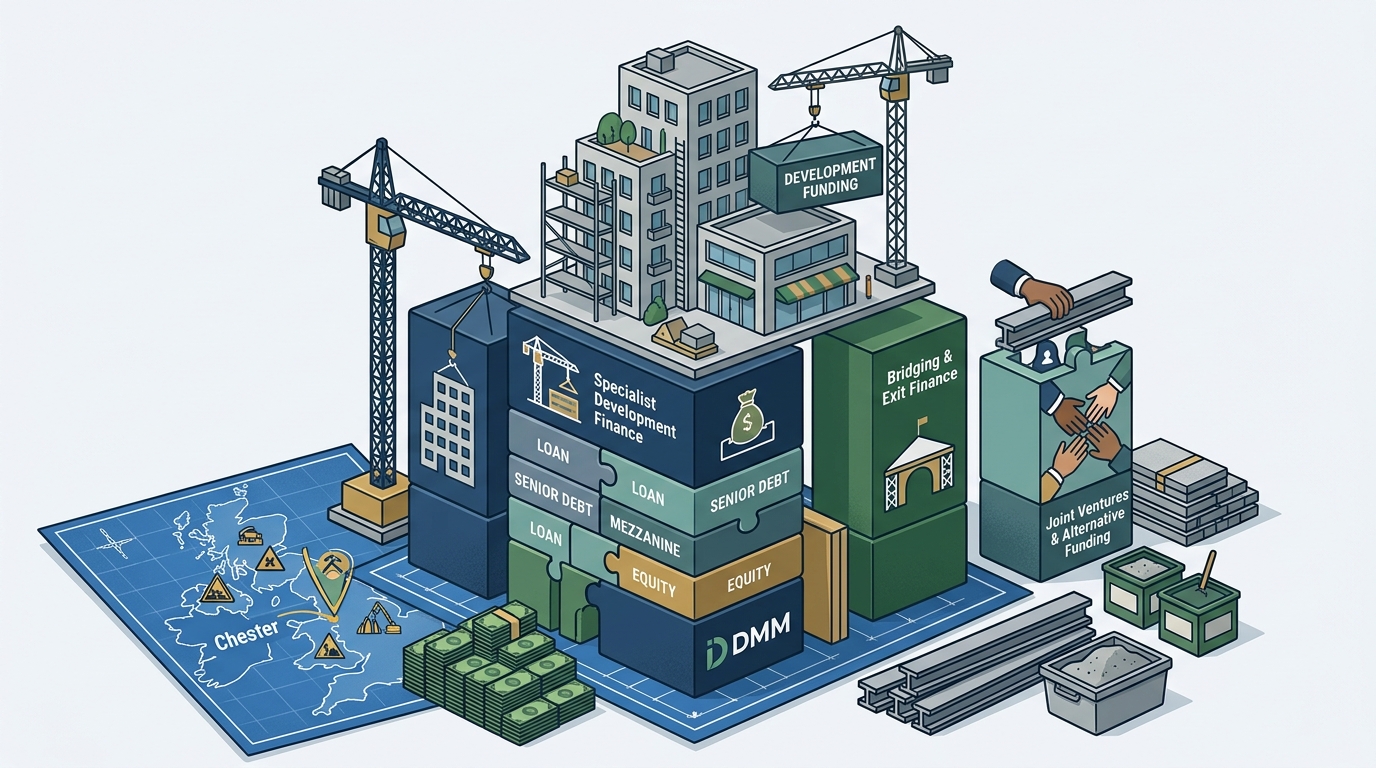
Senior development finance is the primary lending product used by UK property developers to fund construction projects. It is a secured loan, typically taken as a first charge against the development site and the project itself, covering land acquisition and build costs up to around 60-70% of total project costs.
Lenders assess senior debt applications based on Loan to Cost (LTC), Loan to Gross Development Value (LTGDV), and the developer's track record. Most specialist lenders will fund facilities from £150,000 to over £50 million, depending on the scheme. You can compare property development finance lenders to quickly see which products match your project's financial profile.
When to Use Senior Debt
Senior development finance suits projects with planning consent in place and where the developer can contribute meaningful cash equity. It works for new-build residential, commercial builds, and permitted development conversions.
Bridging Finance for Speed and Flexibility
Bridging finance is a short-term secured loan, usually lasting three to twelve months, designed to help developers act fast when opportunities arise. It is commonly used to acquire a development site before planning consent is granted, then refinanced with a longer-term development facility once permission is secured.
As Developer Money Market's bridging finance guide explains, not all bridging providers will accept land without planning as security, so specialist advice matters. Bridging rates in the UK start from around 0.65% per month, with quick decisions a key selling point.
Auction Finance
A subset of bridging, auction finance enables developers to meet the typical 28-day completion deadline after winning a property at auction. Speed of execution is essential, and specialist lenders can often provide funds within days.
Mezzanine and Stretch Funding
Mezzanine finance is a subordinate loan that sits between senior debt and the developer's own equity, enabling borrowers to reduce their cash contribution. It is unsecured, which makes it more expensive than senior debt, but it allows developers to take on projects that would otherwise be beyond their capital reach.
Stretch funding is a single facility from one lender that combines senior and mezzanine elements, simplifying the capital stack. It typically offers a higher LTC than standard senior debt alone. You can explore both options on the property funding guides page, which breaks down criteria for each product type.
When Mezzanine Makes Sense
Mezzanine is most useful when a developer's available equity falls short of what senior lenders require. For example, if your senior lender covers 65% of costs and you only have 20% equity, mezzanine can bridge the remaining 15%.
Joint Ventures and Equity Investment
For developers who need to minimise their own capital outlay, a joint venture (JV) partner can provide up to 100% of the required funding. The JV investor contributes equity in exchange for a share of the project profits, typically split 50:50.
Developer Money Market facilitates equity investment for property development ranging from £200,000 to £1.25 million per project. This route is particularly valuable for first-time developers who may lack the track record needed to secure traditional senior debt independently.
Other Equity Sources
Beyond formal JV structures, developers may also raise equity through private investors, family offices, or crowdfunding platforms. Each comes with different levels of involvement, return expectations, and legal complexity.
Comparing Your Capital Options
Choosing the right funding structure depends on your project size, available equity, timeline, and experience level. The table below summarises the key characteristics of each funding type.
| Funding Type | Typical LTC | Term | Key Benefit | Best For |
|---|---|---|---|---|
| Senior Development Finance | 60-70% | 12-24 months | Lowest cost of debt | Experienced developers with equity |
| Bridging Finance | Up to 75% LTV | 3-12 months | Speed of completion | Site acquisition, auction purchases |
| Mezzanine Finance | Top-up to 85-90% | Aligned with senior | Reduces equity requirement | Developers short on cash equity |
| Stretch Finance | Up to 85% | 12-24 months | Single lender simplicity | Mid-sized residential schemes |
| JV / Equity Investment | Up to 100% | Project duration | No personal capital needed | First-time developers, large schemes |
Using a platform that lets you search and compare over 320 loan products side by side can save significant time and ensure you find the most competitive terms for your situation.
UK Construction Finance: Market Context for 2026
The UK construction market is navigating a complex period. According to industry data, construction output is forecast to contract 2.5% in 2026, a sharp downward revision from earlier growth predictions. However, infrastructure output is expected to rise 3.2% in 2026, buoyed by the government's 10-year infrastructure strategy committing at least £725 billion in public funding.
For private developers, the financing landscape is tightening. A Q1 2025 report from Bibby Financial Services found that 51% of construction SMEs said accessing external finance had become more difficult. Rising material costs affect 72% of firms, and average bad debt write-offs hit £23,000. These pressures make working with a specialist broker more important than ever.
Why Specialist Brokers Matter Now
In a tightening credit environment, a specialist property development finance broker can access products from challenger and specialist banks that high-street lenders simply do not offer. Developer Money Market provides access to over 320 loan products from more than 120 lenders, covering every UK region and project type.
Key Takeaways
- Senior development finance is the foundation of most construction project capital stacks, covering 60-70% of costs.
- Bridging finance offers speed for site acquisitions and auction purchases, with terms typically from three to twelve months.
- Mezzanine and stretch funding reduce your cash equity requirement, enabling larger projects with less personal capital.
- Joint venture partners can fund up to 100% of project costs, ideal for first-time developers.
- Over 51% of UK construction SMEs report difficulty accessing external finance, making specialist broker support critical.
- Comparing multiple lender products on a single platform helps secure more competitive rates and terms.
- The UK government's £725 billion infrastructure commitment is reshaping where capital flows in construction.
Frequently Asked Questions
What is property development finance?
Property development finance is a specialist lending product designed to fund the construction or conversion of residential, commercial, or mixed-use properties. It typically covers land purchase and build costs, secured against the development site.
How much deposit do I need for development finance?
Most senior development finance lenders require the borrower to contribute 30-40% of total project costs as cash equity. However, mezzanine funding or JV equity can significantly reduce the amount of personal capital needed.
Can I get 100% funding for a construction project?
Yes. Through a joint venture arrangement, it is possible to secure 100% of your total development costs. The JV partner provides the equity, while a senior lender covers the remaining debt. You can explore JV and equity investment options with Developer Money Market.
What is the difference between mezzanine and stretch finance?
Mezzanine finance is a separate, subordinate loan from a second lender that tops up your senior facility. Stretch finance combines senior and mezzanine elements into a single facility from one lender, simplifying administration and often speeding up the process.
How long does it take to arrange development finance?
Timelines vary, but most development finance applications take four to eight weeks from initial enquiry to completion. Bridging loans can be arranged much faster, sometimes within days. Working with a broker who packages your application professionally for lenders can reduce delays.
Is bridging finance suitable for land purchases?
Yes. Bridging finance is commonly used to acquire development land, particularly when planning consent has not yet been granted. Once planning is secured, the bridge is typically refinanced with a full development facility.
What are the current interest rates for development finance in the UK?
Development finance rates vary by lender, LTC, project type, and borrower experience. As of mid-2026, senior development rates typically range from 7-12% per annum, while bridging rates start from around 0.65% per month. Comparing across multiple lenders is the best way to find competitive pricing.
Do I need a track record to get construction funding?
Many senior lenders prefer developers with a proven track record. However, first-time developers can access funding through JV equity partners or specialist lenders who assess the strength of the project and the contractor rather than requiring extensive personal experience.
Get Started: Find Your Funding
Finding the right capital structure does not need to be complicated. Developer Money Market lets you search and compare over 320 development, mezzanine, bridging, and exit finance products from more than 120 UK lenders, all with no upfront fees and no impact on your credit score. Start your free funding search today and take the first step toward securing competitive construction project finance.