

VAT Bridging Loan Costs and Fee Structures for Commercial Property Purchases
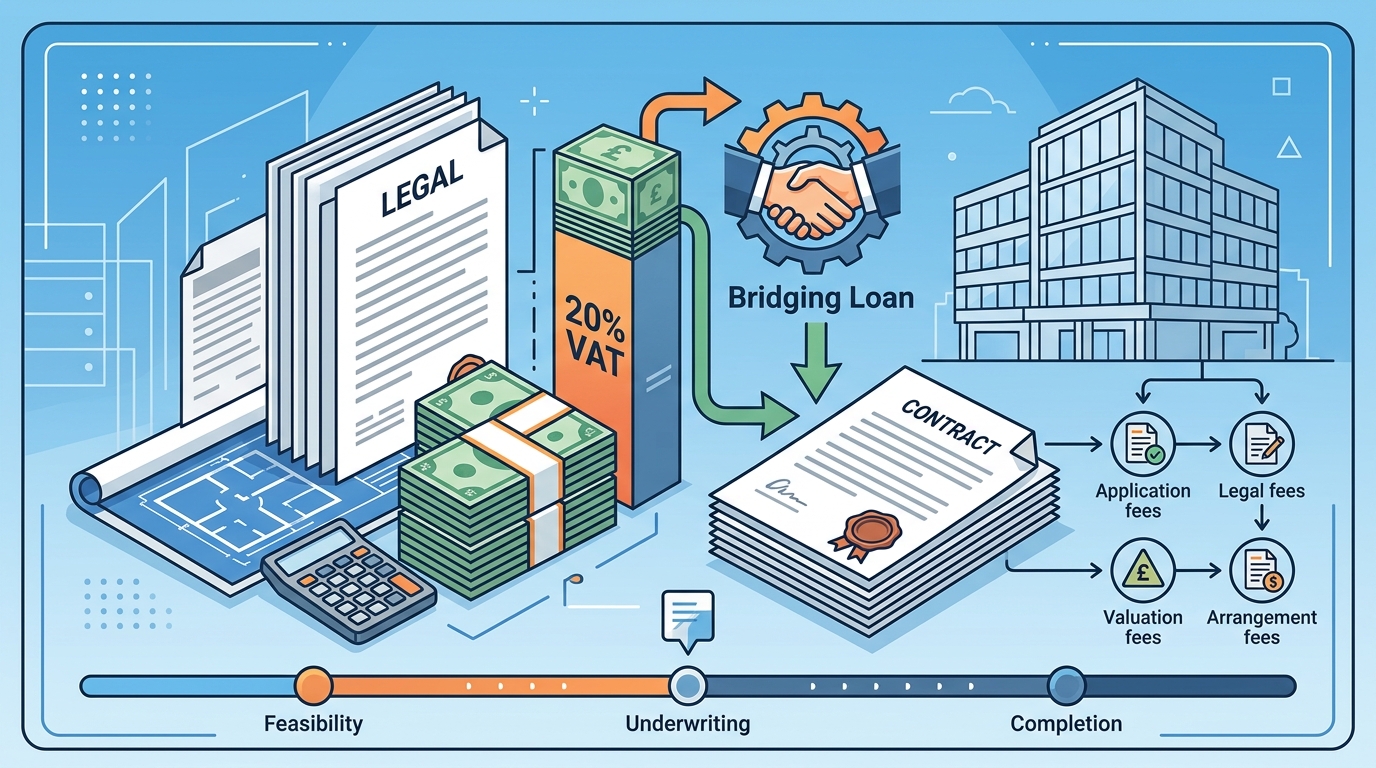
Commercial property transactions in the United Kingdom frequently involve Value Added Tax (VAT) that can significantly impact a developer's cash flow and borrowing requirements. According to recent industry data, VAT on commercial real estate can account for 20% of the total acquisition cost, creating a substantial funding gap for investors who do not opt to tax. This guide details how VAT bridging loans function, their associated costs, and the fee structures developers must navigate to secure commercial assets efficiently. (Independent Finance Broker Services)
What is a VAT Bridging Loan?
A VAT bridging loan is a short-term finance product designed specifically to cover the Value Added Tax liability on a commercial property purchase. VAT bridging loan is a specialized financial instrument that provides immediate liquidity for tax obligations, allowing developers to complete transactions without tying up capital. In the UK, commercial properties are generally subject to a standard VAT rate of 20%. However, sellers can choose to "opt to tax," making the property VAT-bearing. If the buyer is not VAT registered or does not wish to recover the VAT, they must pay the full amount upfront.
Traditional bridging loans typically cover the purchase price and associated costs, but they often exclude VAT unless specifically structured to do so. This exclusion creates a funding shortfall. A VAT bridging loan fills this gap, ensuring that the transaction can proceed smoothly. Developer Money Market specializes in structuring these complex deals, working with over 120 specialist lenders to find solutions that align with your project's financial profile.
The primary benefit of this product is speed and capital preservation. By borrowing the VAT amount, you avoid depleting your working capital, which can be better utilized for refurbishment, planning applications, or other operational expenses. This approach is particularly critical for high-value commercial acquisitions where liquidity management is paramount.
Understanding the Cost Breakdown
The cost of a VAT bridging loan is influenced by several factors, including the loan-to-value (LTV) ratio, the term of the loan, and the specific risk profile of the property. Interest rates for bridging finance generally start from 0.65% per month, but VAT-specific products may carry slightly different pricing structures due to their specialized nature.
Interest Rates and Calculation
Interest on VAT bridging loans is typically calculated monthly. The rate depends on the lender's assessment of the exit strategy and the property's value. For commercial properties, lenders often require a clear plan for how the VAT will be recovered or repaid. If you are VAT registered and can opt to tax the property, you may be able to recover the VAT from HMRC, effectively making the loan interest-free in the long term, though you still pay monthly interest during the bridging period.
Arrangement and Legal Fees
Beyond interest, borrowers must account for arrangement fees, which are usually a percentage of the loan amount. These fees can range from 1% to 2% of the facility. Legal fees are also incurred, covering both the lender's and the borrower's solicitors. Given the complexity of VAT regulations, legal costs for VAT bridging loans can be higher than standard bridging transactions due to the need for specialized tax advice.
Developer Money Market works with lenders who offer competitive fee structures for well-structured deals. Our team ensures that all costs are transparently outlined before you commit, preventing unexpected financial burdens during the transaction process.
Fee Structures and Lender Criteria
Lenders evaluate VAT bridging loan applications based on the viability of the VAT recovery strategy and the overall strength of the exit plan. The fee structure is not one-size-fits-all; it varies significantly between specialist commercial finance providers.
Lender Risk Assessment
Key criteria include the borrower's experience, the property's location, and the clarity of the VAT recovery plan. Lenders prefer borrowers who are VAT registered and have a proven track record of recovering VAT on commercial assets. If the VAT cannot be recovered, the loan becomes a pure cost, increasing the risk for the lender and potentially the interest rate for the borrower.
Commission and Broker Fees
As an independent broker, Developer Money Market does not charge upfront fees for our service. We are compensated by the lender upon successful completion of the loan. This aligns our interests with yours, as we are motivated to find the most cost-effective solution. Our commission models are transparent, and we disclose all potential costs throughout the customer journey.
Understanding these fee structures is crucial for accurate project budgeting. A detailed cost analysis helps determine whether the VAT bridging loan is the most efficient financing tool for your specific commercial acquisition.
Comparing Lending Options
Not all VAT bridging loans are created equal. The market offers various products with different terms, fees, and eligibility requirements. Below is a comparison of common options available to commercial property investors.
| Feature | Standard Bridging Loan | VAT Bridging Loan | Development Finance |
|---|---|---|---|
| VAT Coverage | Usually Excluded | Included | Can Include |
| Typical LTV | 65-75% | Up to 80% of GDV | Up to 90% of Cost |
| Interest Rates | From 0.65% p.m. | Competitive, varies | Monthly or Drawdown |
| Best For | Quick purchases | VAT-bearing assets | New builds/conversions |
| Exit Strategy | Sale or Refinance | VAT Recovery or Sale | Completion Sale |
Choosing the right product depends on your specific situation. If you are purchasing a VAT-bearing commercial property and need to preserve capital, a VAT bridging loan is often the most efficient choice. For larger projects involving construction, development finance may be more appropriate. Developer Money Market provides expert guidance to help you navigate these options and select the best fit for your needs.
Key Takeaways
- VAT Liability: Commercial property purchases often incur a 20% VAT charge, which can create significant funding gaps if not planned for.
- Specialized Financing: VAT bridging loans are designed to cover this specific tax liability, preserving your working capital for other project costs.
- Cost Efficiency: Interest rates can start from 0.65% per month, but total costs depend on arrangement fees and legal expenses.
- VAT Recovery: If you are VAT registered, you may recover the VAT from HMRC, effectively reducing the long-term cost of the loan.
- Broker Value: Developer Money Market offers no upfront fees and access to over 120 specialist lenders, ensuring competitive terms.
- Exit Strategy: A clear plan for VAT recovery or property sale is critical for lender approval and favorable terms.
- Regulatory Compliance: Ensure your transaction structure complies with HMRC regulations to maximize VAT recovery potential.
Frequently Asked Questions
What is a VAT bridging loan?
A VAT bridging loan is a short-term finance product that covers the Value Added Tax liability on a commercial property purchase, allowing investors to complete transactions without depleting their capital.
How much does a VAT bridging loan cost?
Costs include monthly interest rates, which can start from 0.65% per month, plus arrangement fees (typically 1-2%) and legal costs. Total costs vary based on the lender and loan structure.
Can I recover the VAT on a bridging loan?
If you are VAT registered and the property is opted to tax, you can typically recover the VAT from HMRC. The loan covers the upfront payment, and you reclaim it later, effectively making the loan interest-only during the term.
Do I need to be VAT registered to get this loan?
While being VAT registered helps with recovery, lenders primarily assess your ability to repay the loan. However, a clear VAT recovery plan strengthens your application and may lead to better terms.
How long does a VAT bridging loan last?
These loans are short-term, typically ranging from 3 to 18 months, depending on your exit strategy, such as selling the property or refinancing with a long-term mortgage.
What is the maximum loan amount?
Loan amounts can vary widely, with some lenders offering facilities from £25,000 up to £150 million for large commercial projects, depending on the property value and borrower profile.
Are there upfront fees for using a broker?
Developer Money Market does not charge upfront fees. We are compensated by the lender upon successful completion, ensuring our services are cost-neutral for you.
Secure Your Funding
Navigating the complexities of VAT bridging finance requires expertise and access to a wide network of specialist lenders. Developer Money Market is here to help you structure your deal efficiently and secure the best possible terms. With no upfront fees and access to over 320 loan products, we ensure your commercial property acquisition proceeds without financial hindrance.
Contact us today to discuss your requirements. Visit our Contact Us page or call 01244 953360. Explore our Blog for more insights on property finance, or review our Compare Property Development Finance Lenders resources to understand your options better.