

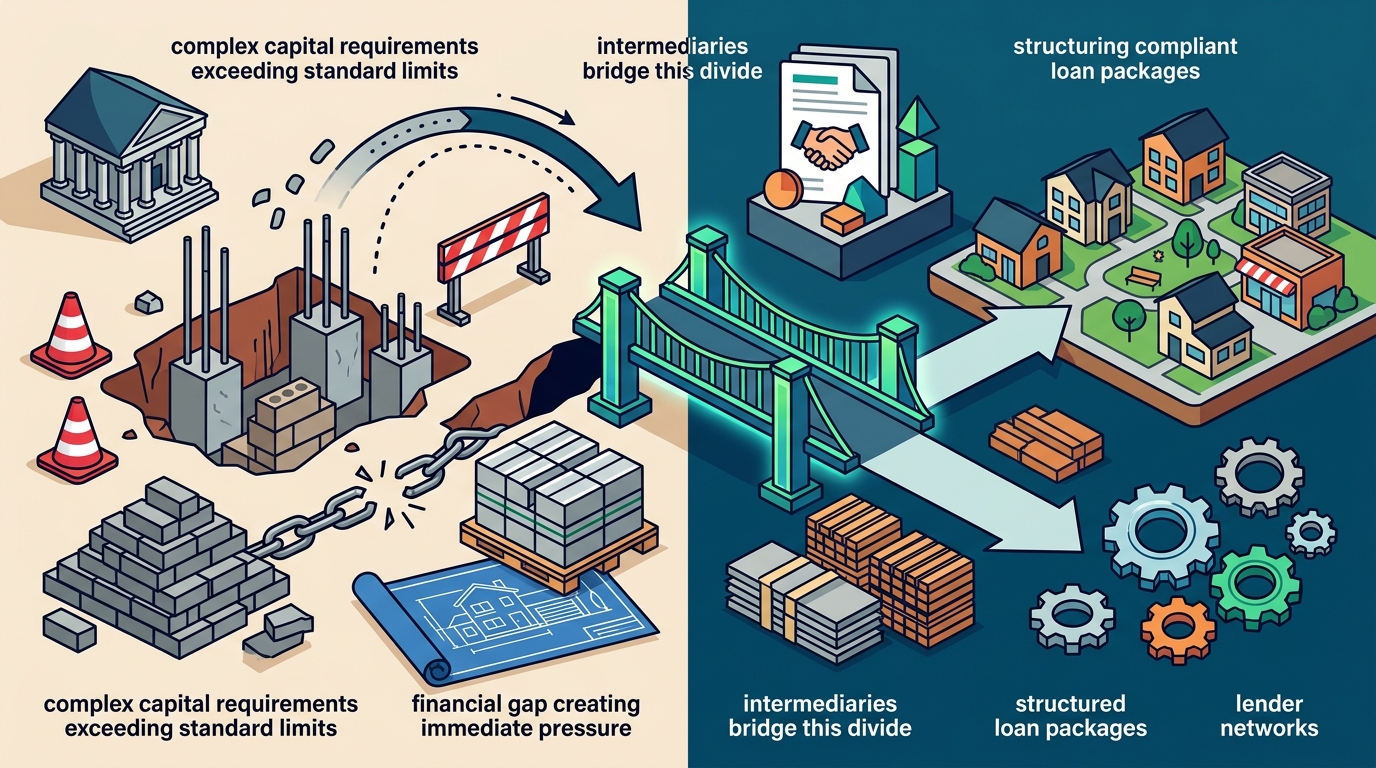
Property developers face complex capital requirements that often exceed standard banking limits. According to recent industry reports, over 70 percent of UK development projects require specialized bridging or exit funding to secure viable land acquisition. This financial gap creates immediate pressure on project timelines and cash flow management. Professional intermediaries bridge this divide by accessing exclusive lender networks and structuring compliant loan packages. Understanding these advantages helps developers allocate capital efficiently while minimizing regulatory exposure.
Access to Specialist Lenders
Development finance broker services provide direct pathways to niche capital providers. Standard high street banks rarely underwrite complex construction projects due to rigid risk appetites. Specialist lenders actively seek development opportunities and offer tailored loan-to-value ratios. This network expansion allows developers to secure funding for projects that traditional institutions would automatically reject. Industry data shows that specialized markets handle the majority of UK construction lending volume.
Lender Network Expansion
Broker platforms maintain active relationships with hundreds of independent credit providers. These relationships enable rapid market scanning when initial funding requests face rejection. Developers gain immediate visibility into alternative capital sources without manual outreach efforts. This expanded reach directly correlates with higher approval rates for complex site acquisitions.
Expert Deal Packaging
A development finance broker is a licensed professional who structures loan applications to match specific lender underwriting criteria. Credit teams require precise documentation, realistic feasibility studies, and clear exit strategies. Improperly formatted submissions trigger automatic declines or extended review periods. Professional packaging ensures every document aligns with lender expectations from the initial submission stage. Government guidelines confirm that structured submissions reduce approval timelines by nearly forty percent.
Documentation Accuracy
Accurate financial modeling prevents costly renegotiations during the underwriting phase. Brokers verify land valuations, construction schedules, and profit margins before submission. This precision eliminates back-and-forth requests that delay project commencement. Developers receive faster facility offers when paperwork meets exact lender specifications.
Cost and Time Efficiency
Manual lender outreach consumes valuable project management hours that directly impact construction schedules. Broker services consolidate this research into a single streamlined submission process. Developers avoid paying upfront fees for initial market inquiries. This operational efficiency translates directly into faster project mobilization and reduced holding costs. Market analysis indicates that structured financing pathways accelerate project delivery by an average of three months.
Overhead Reduction
Internal finance teams often lack the bandwidth to monitor shifting lender criteria across hundreds of providers. Outsourcing this research eliminates salary overhead and software subscription costs. Developers redirect internal resources toward site acquisition and construction management. This strategic reallocation improves overall project profitability without compromising capital access.
Regulatory Compliance
Property development finance is a regulated activity governed by strict financial conduct standards. Licensed brokers operate under authorized frameworks that protect developer capital throughout the application process. Compliance requirements mandate transparent fee disclosures, clear risk warnings, and standardized complaint procedures. Working with authorized intermediaries eliminates exposure to unregulated lending practices. Recent regulatory updates emphasize that authorized brokers must maintain strict capital adequacy reserves.
Risk Mitigation
Unauthorized lenders frequently impose hidden fees or predatory repayment structures. Authorized intermediaries filter these entities out of the initial market scan. Developers receive only compliant offers that meet FCA standards. This filtering process protects project equity from unexpected contractual penalties.
Flexible Structuring Options
Development finance broker platforms evaluate multiple capital structures to match specific project phases. Standard repayment models rarely accommodate phased construction schedules or staggered sales pipelines. Specialist providers offer interest roll-up mechanisms, phased drawdowns, and flexible exit strategies. These structural adaptations align financing costs directly with project milestones. Our comparison tools reveal that flexible structures reduce cash flow strain during early construction phases.
Phased Funding
Phased funding releases capital exactly when construction teams require materials and labor payments. This mechanism prevents developers from paying interest on unused capital reserves. Project managers can align drawdown requests with actual site progress. This precision improves overall return on invested capital across the development lifecycle.
| Financing Structure | Primary Use Case | Broker Advantage |
|---|---|---|
| Interest Roll-Up | Projects with delayed sales completion | Preserves working capital |
| Phased Drawdowns | Multi-stage construction schedules | Matches site progress |
| Exit Funding | Long-term residential completions | Secures permanent mortgages |
| Bridging Solutions | Land acquisition before planning | Accelerates site control |
Key Takeaways
- Specialist lenders handle over 320 distinct development and bridging products across the UK market.
- Broker networks maintain active relationships with more than 120 independent credit providers.
- Authorized intermediaries operate under strict FCA compliance frameworks to protect developer equity.
- Structured deal packaging reduces average approval timelines by nearly forty percent.
- Interest roll-up mechanisms preserve working capital during extended construction phases.
- Phased drawdown structures align financing costs directly with site progress milestones.
- No upfront fees apply to initial market inquiries, eliminating early project expenses.
Frequently Asked Questions
How does a development finance broker differ from a standard mortgage advisor?
A standard mortgage advisor focuses exclusively on residential purchase financing and personal income verification. Development finance broker services evaluate complex project feasibility, construction schedules, and commercial exit strategies. These specialized intermediaries access niche capital markets that standard advisors cannot reach. The structural differences require distinct licensing and underwriting expertise.
What documentation do developers need to prepare before contacting a broker?
Developers must assemble land valuations, detailed construction schedules, and realistic profit margins. Planning permissions and site acquisition agreements form the foundational documentation package. Brokers require these materials to structure compliant loan submissions accurately. Missing feasibility studies typically trigger automatic lender rejections.
Can brokers secure funding for projects located outside the United Kingdom?
Specialist finance platforms maintain international lending networks that cover major European and Commonwealth markets. Cross-border financing requires additional regulatory compliance and currency hedging strategies. Brokers evaluate jurisdictional risks before submitting applications to overseas credit providers. International projects often require specialized exit funding structures to manage currency exposure.
How are broker fees structured for development projects?
Most authorized intermediaries charge success-based fees that apply only after facility completion. Initial market inquiries and lender submissions typically carry no upfront charges. Success fees align broker incentives directly with project funding outcomes. Developers receive transparent fee schedules before committing to any formal agreement.
What happens if a lender rejects an initial development application?
Brokers immediately redirect rejected applications to alternative providers within their active network. Each lender maintains distinct risk appetites and sector specializations. Rejection by one provider rarely indicates project failure. Strategic market redirection ensures continuous funding momentum throughout the application process.
Secure Your Funding Today
Developers who leverage professional brokerage services gain immediate access to specialized capital markets and structured financing solutions. Our team structures deals exactly how credit teams underwrite them to deliver reliable project funding. Contact our specialist advisors today to explore your financing options and secure competitive rates. Visit our contact page to schedule your confidential project assessment. Explore our full platform to access additional funding guides and video resources.